

Click on a Focus area to explore
-
CAPTURE STRATEGIC INSIGHTS
-
Competitive Analysis:
-
Assess Market Potential
-
Identify Customer Unmet Needs
-
Understand Customer Perceptions
-
Market + Regulatory Trends (Global, Regional)
-
Business and Competitive Insights
-
Technical & Mfg Feasibility
-

2. DRIVE STRATEGY & BUSINESS MODEL DEVELOPMENT
-
Reaffirm Vision/ Mission Statement
-
Strategic Plan, 3-5 Yr:
-
Financial Targets and Capacity Planning
-
Product/Service and Technology Roadmap
-
Resource + Capital Plan
-
Learning Curriculum (Internal & External)
-
Internal versus External Manufacturing Analysis
-
IMPLEMENTATION + OUTPUTS
3. STRATEGY DEPLOYMENT
-
Operating Division Annual Operating Plan:
-
Goals + Initiatives
-
Key Performance Measures + Targets
-
Resourcing + Capital Plan
-
External Manufacturing
-
Selection + Tech Transfer
-
Governance
-
-
1. CAPTURE STRATEGIC INSIGHTS


Process Outputs
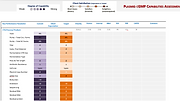
1. Create a summarized SWOT Matrix that synthesizes (i) Internal Strengths/Weaknesses: from
feasibility and capability analysis, (ii) External Opportunities/Threats: from market, customer,
and regulatory insights.
2. Leverage House of Quality (QFD) to assess technical solutions with unmet market needs.
3. Create Competitive Analysis Matrix to detail and prioritize current vs target Capabilities, Capacity, and Customer Service Levels. This will also include strategic implementation (eg. internal/external, acquisition, merger) and syncronize with company roadmap.
Process Implementation
-
Assess Market Potential & Customer Landscape:
-
Identify market size, growth drivers, and segmentation using SWOT (Opportunities/Threats) and competitive analysis.
-
Evaluate customer unmet needs and perceptions using House of Quality (Voice of the Customer → Design Requirements).
-
Prioritize strategic markets or segments based on customer value and accessibility.
-
-
Identify Voice of the Customer / Requirements:
-
Translate customer expectations into actionable technical and operational targets via the House of Quality.
-
Map current customer satisfaction against critical-to-quality attributes.
-
Highlight gaps between existing offerings and customer needs.
-
-
Understand Regulatory & Industry Trends:
-
Identify evolving compliance requirements (e.g., FDA, EMA, ISO) that may open or limit market entry.
-
Assess how regulatory shifts create risks or strategic openings (e.g., accelerated pathways, sustainability mandates).
-
Use SWOT to capture these as Threats or Opportunities.
-
Competitive Analysis (Current and Future):
-
Capability (R&D strength, IP portfolio, innovation velocity)
-
Capacity (supply chain, scale-up flexibility, lead times)
-
Customer Service (support, delivery reliability, responsiveness)
-
-
Identify how the competition is evolving (product launches, M&A, pricing shifts).
-
Use SWOT and competitive matrix to position strengths/weaknesses against key competitors.
-
-
Assess Technical & Manufacturing Feasibility:
-
Assess technology readiness and manufacturing scalability.
-
Identify internal gaps in process capability, capacity constraints, or talent needs.
-
Map potential design or manufacturing risks via the House of Quality (Design → Process relationships).
-
2. DRIVE STRATEGY & BUSINESS MODEL DEVELOPMENT

1

3-4

7

2
5

8
Process Outputs
-
Hoshin Kanri X-Matrix:
-
Vision / Mission Statement: Revalidated to ensure alignment with strategic direction.
-
Long-term goals
-
Annual priorities
-
Key Performance metrics
-
-
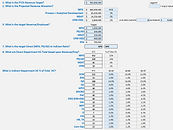
Financial Targets Dashboard: Sets 12–18 month goals for Revenue, COGS, and EBITDA.
-
Manufacturing Demand Plan: Converts financial targets into operational demand.
-
Capacity Analysis: Assesses existing vs. required capacity + gap reconciliation plan.
-
Resource Analysis + Labor Cost Model: Projects labor costs to achieve EBITDA goals using Rev/Emp + activity-based logic.
-
Cost Savings Target Tracker: Captures initiatives to improve margin and operational efficiency.
-
Product / Technology Roadmap: Aligns CAPEX and OPEX with strategy.
-
Product Development Pipeline. 3-5 Product Development roadmap.
-
Learning & Capability Curriculum: Defines training programs needed to build execution capability.
-
Make vs. Buy Manufacturing Analysis: Evaluates internal vs. external manufacturing strategy.
Process Implementation
-
Build the Hoshin Kanri (X-Matrix):
-
Reaffirm Vision & Mission: Use the Strategic Insights from (market, customer, regulatory, capability) to pressure-test vision and mission for relevance. Reword, if needed, to reflect new strategic ambitions
-
Develop and populate Strategic Objectives (3–5 Yr): Establish enterprise objectives typically around: Growth through Innovation, Customer Experience, Employee Engagement, Safety, Quality/Compliance, Financials. These should be aspirational and inspirational.
-
Identify annual breakthrough objectives + Initiatives
-
Link initiatives and KPIs to each objective
-
Assign accountable owners and timeline
-
-
Set Financial Targets & Translate to Demand:
-
Define 12–18 month financial goals by product/service
-
Calculate COGS, revenue, EBITDA targets
-
Translate financials into volume demand by SKU
-
Build the manufacturing demand plan
-
-
Conduct Capacity & Cost Savings Analysis:
-
Model current capacity vs. required output
-
Identify capital or labor needs to meet growth
-
Outline cost savings opportunities (Lean, sourcing, etc.)
-
-
Build Product/Technology Roadmap:
-
Define timing for product and service launches
-
Map tech or capability enablers
-
Integrate quality, regulatory, or external partnership timelines
-
-
Develop Learning & Capability Curriculum:
-
Identify required skills for strategy execution
-
Map internal programs and external partners
-
Tie learning modules to strategic initiatives or job roles
-
-
Model Resourcing Plan + Labor Cost Targets + Activity Analysis:
-
Calculate base labor cost from EBITDA targets
-
Break into direct/indirect:
-
Direct: based on Rev/Emp or volume per worker
-
Indirect: activity-based allocation + fixed support %s
-
Build variance reconciliation model (actual vs. target)
-
Support reconciliation model with Activity Analysis
-
-
Conduct Internal vs. External Manufacturing Analysis:
-
Build matrix to assess cost, control, and scalability tradeoffs
-
Align sourcing strategy with product maturity and capital plan
-
3. DRIVE STRATEGY & BUSINESS MODEL DEVELOPMENT


Process Outputs
-
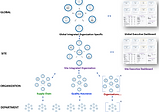
Tiered both horizontally across Organizations + Vertically within Operating Division Annual Operating Plan:
-
Goals + Initiatives- Clearly defined and measurable objectives with aligned initiatives that support strategic execution and business performance. Integrated initiatives prioritized based upon scoring criteria and resource allocation.
-
Key Performance Measures + Targets- Quantifiable metrics and performance thresholds that allow for monitoring of strategic progress and early identification of risks typically across People, Safety, Quality, Delivery, Cost/Financial, Innovation.
-
Resourcing + Capital Plan- A forward-looking allocation of financial and human capital needed to support initiatives, growth, and operational continuity.
-
External Manufacturing- A defined outsourcing strategy that leverages external capabilities to enhance scalability, cost-efficiency, and flexibility.
-
Selection + Tech Transfer- A structured process ensuring the right external partners are selected and enabled through robust technology transfer mechanisms.
-
Governance- An integrated, multi-tier governance structure that oversees strategic execution, monitors KPIs, and proactively manages risk.
-

Process Implementation
-
Tiered Operating Division Annual Operating Plan:
-
Use the Hoshin Kanri X-Matrix to cascade goals and initiatives vertically across corporate, division, and department levels.
-
Facilitate horizontal integration via cross-functional planning sessions and alignment checkpoints.
-
Update plans quarterly in tiered business reviews.
-
-
Goals + Initiatives:
-
Define SMART goals with clear owners and timelines at each tier of the organization.
-
Connect initiatives to performance plans and functional scorecards to drive accountability.
-
Re-align annually or as business needs shift.
-
-
Key Performance Measures + Targets:
-
Develop KPIs for each initiative aligned to strategic pillars.
-
Implement tiered dashboards using tools like Power BI or Tableau.
-
Monitor monthly in governance forums and flag performance risks early.
-
-
Resourcing + Capital Plan:
-
Conduct a top-down and bottom-up planning process to balance financial targets with operational capability.
-
Align capital investments to initiative phasing and business risk exposure.
-
Reallocate resources dynamically through steering committee oversight.
-
-
External Manufacturing:
-
Apply a structured make-vs-buy framework to select strategic external partners.
-
Define roles and volumes for external partners based on capacity and product lifecycle needs.
-
Review strategy in quarterly operations and sourcing forums.
-
-
Selection + Tech Transfer:
-
Use standardized partner selection scorecards (tech fit, quality, capacity, cost).
-
Develop tech transfer project plans with clear milestones, documentation, and cross-functional ownership.
-
Include CDMO in joint governance to ensure transparency and accountability.
-
-
Governance:
-
Implement a 3-tier governance structure:
-
Executive Steering Committee (quarterly strategic oversight)
-
Tier 2 – Functional and Divisional Reviews (monthly tracking)
-
Initiative and Core Team Meetings (biweekly execution focus)
-